You may be cutting down your trees to spite your life.
For the week of August 22, 2015 / 7 Elul 5775
Shoftim
Torah: Devarim/Deuteronomy 16:18 – 21:9
Haftarah: Isaiah 51:12 – 52:12
Download Audio [Right click link to download]
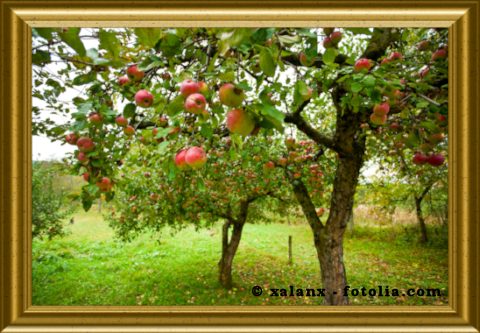
When you besiege a city for a long time, making war against it in order to take it, you shall not destroy its trees by wielding an axe against them. You may eat from them, but you shall not cut them down. Are the trees in the field human, that they should be besieged by you? Only the trees that you know are not trees for food you may destroy and cut down, that you may build siegeworks against the city that makes war with you, until it falls. (Devarim/Deuteronomy 20:19-20)
This week’s parsha (weekly Torah reading portion) is full of wisdom regarding justice, appropriate forms of worship; laws specific to kings; and the great passage anticipating prophets in general, the Messiah in particular. Among all these God-inspired rules and regulations is a prohibition against cutting down fruit trees in time of war. The reason is pretty straightforward: fruit trees provide food. If you cut them down, you forgo a necessary food source. Without food, people die. Can’t win wars that way. And even if you do, it might be a very long time, if ever, before new fruit trees can be planted and bear fruit again. You can cut down non-fruit-bearing trees, but not the fruit trees.
That makes sense doesn’t it? Makes sense, but it may not be that obvious at the time. Human nature, being what it is, when we are in the situation, it is so easy to get completely focused on the goal at hand – which in this case is the need to win a battle through the technology of siegeworks -that the obvious may not be so obvious after all. In the moment, I suspect no one would seriously consider cutting down all the fruit trees at once. But what’s wrong with one or two? We can eat the fruit off of them, their wood is good, and they’ll be more than enough fruit trees left over. But once we justify the cutting down of a few, the next thing we know it’s a few more, and a few more until they are all gone. God understands us better than we do ourselves.
But what is it that drives this kind of near-sighted compulsion? Note it’s not that it is a sin to ever cut down a fruit tree as if they themselves are sacred. A healthy orchard demands good husbandry techniques, necessitating keeping it from becoming too dense, thus creating the need to cut down a tree here or there. The commandment is specific to the using of their wood for military advantage. God deemed such a directive essential, because he knows what happens to us when we are focused on a goal, especially in dire situations such as a war. In fact, there’s no telling what we might do when facing any kind of dire situation – or situations not that dire, just dire to us. We might even undermine our own survival in the pursuit of our goals.
How many “fruit trees” are we cutting down in the pursuit of the things we want? We are willing to abuse the sources of life that God has provided in an attempt to resolve our problems and pursue our desires. We abuse loved ones to satisfy ourselves in the moment. We poison the environment because we give preference to our current generation over future ones. We kill off our offspring in the womb because they may cramp our lifestyle. Fruit trees all of them! Cut them down! Use them up now! Do what it takes to please ourselves even if it is at our own expense! And that’s what we fail to understand about this. Sure, we should be concerned about our loved ones, the environment, and the preborn for their own sake. Absolutely! But can’t we see what we are doing? As we cut our fruit trees down, all the while thinking we are contributing to our own welfare and success, we are actually undermining our own survival! Whatever might be gained in the moment is nothing compared to what we lose in the long run.
This may be more difficult to realize in our day compared to that of Moses. For compared to ancient Israel, we have so much more stuff, so many more distractions. The result is that we fail to recognize how poor we really are. We don’t even know that we suffer from a lack of nourishing life fruit as we become more and more self-focused in the midst of a cynical meaningless world.
It doesn’t need to be like this though. God is a God of restoration. More than that! He is a God of resurrection. The Scriptures teach that the power that raised Yeshua from death is at work in his followers (see Ephesians 1:15-23). Whatever fruit trees we have cut down can be brought back to life by trusting in the Messiah. The life of God is so powerful, you would be amazed at what he can do once we stop destroying the fruit trees he has provided and look to him to resurrect the dead.