Fake Prayers

For the June 10, 2017 / 16 Sivan 5777

The word "fake" superimposed over a man praying by himself in a church building.

Be-Ha’alotkha
Torah: B’midbar/Numbers 8:1 – 12:16
Haftarah: Zechariah 2:14 – 4:7 (English 2:10 – 4:7)

Download Audio [Right click link to download]

I am not able to carry all this people alone; the burden is too heavy for me. If you will treat me like this, kill me at once, if I find favor in your sight, that I may not see my wretchedness.” (B’midbar/Numbers 11:14-15)

I think Moses is amazing. I know he didn’t get off to the greatest start, murdering the Egyptian and running for his life as he feared the wrath of Pharaoh, king of Egypt. Note that he knew he was someone special, having miraculously survived the murder-all-the-baby-boys decree, rescued by Pharaoh’s own daughter no less. Killing the Egyptian was wrong, but it was the result of a good motive, as he reacted to his people’s ongoing oppression. The Torah doesn’t tell us how he learned he was a Hebrew or knew that he had a key role to fulfill, but like many people of destiny, he walked a twisted road to get there.

I don’t blame him for his resistance to God, when at age eighty he finally received his commission. Even though he was still afraid for his life, and in spite of his attempt to skirt his call, he went back to Egypt anyway. From that point on, with the exception of a couple of misguided actions due to frustration with the people (again no criticism from me about that), he performed magnificently in the face of Pharaoh’s stubborn short-sightedness and a fairly uncooperative, critical people to lead.

What made Moses such an effective leader was how he dealt with the problems he faced. Every time another issue arose, he would go to God for what he should do. Perhaps this is where Paul in the New Covenant Writings derives his encouragement to “Pray without ceasing” (1 Thessalonians 5:17). While some may think Paul intended the believers in Thessalonica to utter barely audible prayers under their breath every waking second – nothing wrong with that if you can sustain such a thing – but more likely he was calling them (and by extension us), to regularly defer to God just as Moses did.

But there is more for us to learn from Moses’s prayers than the frequency thereof. He also “told it like it is,” so to speak. Moses’s prayer I quoted at the start, was in response to one of the many occasions of the people’s complaining. This time a bunch of discontents got everyone riled up about the boring nature of their menu. The supernatural provision of the bread-like substance called manna wasn’t good enough for them. They demanded that Moses produce meat. This pushed him to the limit and he told God so, and that he couldn’t take it anymore, saying: “If you will treat me like this, kill me at once(B’midbar/Numbers 11:15).

That’s not one of the nicest prayers I’ve ever read. It’s pretty confrontational and demanding, don’t you think? Note how he puts the blame squarely on God even though it was the people who were making life so difficult for him. Moses prayed that way because he knew something that we often fail to grasp: while people are responsible for their actions, our lives are ultimately in God’s hands.

His prayer is also pretty drastic: “resolve the problem or kill me!” If God is so in control, why not leave the resolution of the situation with him. But this is how Moses was feeling at the time. So that’s what he prayed. How did God respond? Did Moses get a lecture about appropriate piety and respectability? No; God heeded Moses’s desperate plea.

Why would God do that? Why didn’t he instead put Moses in his place for addressing him that way? Or at least ignore him (which, if we are honest, is probably the way we think God deals with us a good deal of the time)? God answered Moses because this is the kind of prayer God answers: direct and honest. Moses prayed a prayer of desperation because he was desperate. God knew that. Why pretend otherwise? Anything else would have been fake. God sees through fake. He isn’t offended by honesty. Unlike the complainers who put the onus on Moses, who had no ability to grant their request, Moses went to the only one who could do something about his difficult situation. And by baring his heart, he not only got an audience with the Sovereign of the Universe, he got the help he (and the whole community) needed.

The Messiah addresses this in his introduction to his model prayer:

And when you pray, do not heap up empty phrases as the Gentiles do, for they think that they will be heard for their many words. Do not be like them, for your Father knows what you need before you ask him. (Matthew 6:7-8)

He is not only addressing meaningless repetition here, but the emptiness of fake prayers as well. We need to tell it like it is when we pray. Anything else is just a show. That doesn’t mean there is no room for formal prayer, especially in public. But it better be sincere or else you’ll find yourself filling up space with “empty phrases” than truly conversing with your Heavenly Father. Perhaps it’s time to tell God how you really feel.

All scriptures, English Standard Version (ESV) of the Bible

Facebooktwitterredditpinterestlinkedinmail

Are You Agitated?

For the week of June 3, 2017 / 9 Sivan 5777

Young man, deep in thought

Naso
Torah: B’midbar/Numbers 4:21 – 7:89
Haftarah: Shoftim/Judges 13:2-25

Download Audio [Right click link to download]

And the woman bore a son and called his name Samson. And the young man grew, and the LORD blessed him. And the Spirit of the LORD began to stir him in Mahaneh-dan, between Zorah and Eshtaol. (Shoftim/Judges 13:24-25)

The story of Samson (Hebrew: Shimshon) is a troubling one. Clearly he is especially chosen by God to make a positive difference in his day, but on a personal level, he is pretty much dysfunctional. For some Bible readers this is problematic. But I think that’s because we tend to have difficulty accepting that God might use a person of questionable character. Yet the Bible demonstrates how God uses both good and bad people to accomplish his purposes. That he uses someone in no way validates them. It is reasonable to assume that God would have preferred Samson be of much more noble character, but it should be comforting to know that a person’s irresponsible behavior can’t undermine God’s purposes (at least not in the long run). We are not looking at Samson this week to derive life lessons on virtue. Instead, we will focus on an aspect of how to discern God’s will in spite of Samson’s character.

Before Samson began to live out his God-given call, we read in our Haftarah (supplemental Scripture reading): “the Spirit of the LORD began to stir him” (Shoftim/Judges 13:5). The Hebrew word translated “stir” is “pa-am” and conveys the idea of being troubled. It’s how Pharaoh, King of Egypt, and Nebuchadnezzar, King of Babylon, were feeling after their hard-to-understand dreams (see Bereshit/Genesis 41:8 & Daniel 2:1-2). In Samson’s case, it wasn’t dreams that made him feel that way, but God. My guess is that the Bible translators resisted using more negative-sounding words, such as “troubled” or “anxious,” since God was the cause. But even though “stir” sounds more positive (or at least not negative) the result is similar. God caused Samson to experience some sort of internal agitation. How the biblical narrator understood the source of the agitation to be God, we don’t know. Regardless, we are to understand that it was this stirring that moved Samson to engage the oppressive situation Israel was under at that time.

I wonder if it is possible to misunderstand the stirring of the Lord in our lives. Could it be that there are people who right now are experiencing agitation from God and don’t know that it is from him? We may find ourselves sad, frustrated, angry, disappointed, or anxious. But because these are deemed to be negative emotions, we try to get rid of them, thinking that trusting God means to always be joyful and at peace. Others may not be so quick to be free of such feelings, but instead of responding to God’s promptings, act them out in personally and relationally destructive ways.

As in Samson’s day, there is much in our world that should trouble us. Yeshua taught his followers to pray, “Your kingdom come, your will be done, on earth as it is in heaven” (Matthew 6:10). This means that the way things are is not the way they should be. It is not God’s will that we simply accept evil. One day, all evil will be eradicated, but until then, we must pray that God does something about it. When he answers those prayers, it is often through the efforts of people like you and me. And the first thing those people experience is stirring.

Are you being stirred? While some people are very sensitive to the ills of life and seem to be burdened by all sorts of things, most folks appear to be oblivious as they are only concerned about their own existence. But perhaps there is more going on in the hearts of people than we realize. What would happen if we stopped and took inventory of what agitates us. What would we find? While some agitation is due to our own selfishness and lack of faith, it could be that we are being stirred by God to do something.

When we find ourselves upset over issues that are truly wrong from God’s perspective, we may discover that he is the source of our agitation. To resist his agitation, is to resist what he wants to do through you. But if God is our agitation source, then it’s time to seek him as to what he would have us do about it.

All scriptures, English Standard Version (ESV) of the Bible

Facebooktwitterredditpinterestlinkedinmail

Israel Will Flourish

For the week of May 27, 2017 / 2 Sivan 5777

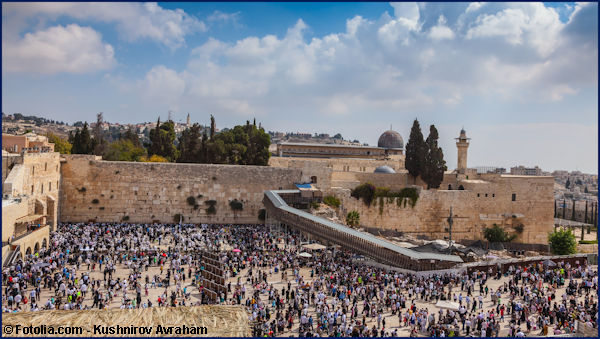
The Western Wall plaza in Jerusalem filled with people

B’midbar
Torah: B’midbar/Numbers 1:1 – 4:20
Haftarah: Hosea 2:1-22 (English: 1:10-2:22)

Download Audio [Right click link to download]

Yet the number of the children of Israel shall be like the sand of the sea, which cannot be measured or numbered. And in the place where it was said to them, “You are not my people,” it shall be said to them, “Children of the living God.” (Hosea 2:1 [English 1:10])

This week’s parasha is the first of the fourth book of the Torah. The Hebrew title, “B’midbar” (“In the Wilderness”) is taken from the first sentence of the book, and aptly describes much of its overall content as we read about Israel’s journey through the wilderness. The English title, “Numbers,” is a translation of the Greek title “Arithmoi” and is due to the long description of Moses’s census of the people. The choosing of the accompanying Haftarah reading from the prophet Hosea is likely because of its reference to “the number of the children of Israel” I quoted at the start.

Paul’s quoting this passage in his letter to the Romans is often misunderstood. Tragically, he tends to be misrepresented regarding his understanding of God’s relationship to the Jewish people in the New Covenant era. This Hosea passage is quoted by Paul early in the section of Romans where he discusses that very issue (see Romans 9-11). It is most likely there were non-Jewish believers in Rome who had deduced that God had rejected the descendants of Abraham, Isaac, and Jacob due to the combination of a significant amount of Jewish people who were antagonistic to Yeshua’s messianic claim and the openness to Yeshua on the part of a number of Gentiles (non-Jews). But Paul states that the rejection conclusion is both ignorant (see Romans 11:25) and arrogant (see Romans 11:18). God’s faithfulness to Israel was always and continues to be based on his unchanging, unconditional promises to Abraham, Isaac, and Jacob. The current situation, however perceived, in no way undermines that.

However, there are two places in Romans that can appear to support the rejection scenario. The first is 2:17-29. This is where Paul defines what constitutes a genuine Jewish person. But contrary to the conclusions of some, he is not establishing a notion of the “spiritual Jew” in contrast to Jews by natural descent. Rather, he is emphasizing that the matters of the heart are more important than external forms. This is in keeping with the prophetic tradition of the Hebrew Scriptures and the teaching of Yeshua that religious rituals, while having their place, are not that which express true godliness. What really counts is (in no particular order) faith, love, mercy, truth, humility, justice, and so on. Yet people, not just Jewish people, have always tended to focus on externals. Paul is not claiming that Gentile believers are the real Jews, while the natural ones are not.

Romans chapter nine, where he quotes our Haftarah, also tends to be misunderstood. To conclude Paul means anything but that God has not rejected natural Israel completely ignores God’s message through Hosea. God called Hosea to graphically illustrate God’s love for Israel by having him marry an unfaithful woman. Hosea’s heartbreak over his wayward wife is likened to God’s own yearning for his people. By Hosea’s referring to “the number of the children of Israel shall be like the sand of the sea,” God confirms his promise made to Abraham (see Bereshit/Genesis 22:17). And by quoting Hosea, Paul is doing the exact same thing. That Gentiles who have put their faith in the Jewish Messiah are accepted as God’s children too, does not negate God’s faithfulness to Israel.

We need to remember that the purpose of God’s promise to Abraham and his natural descendants through Isaac and Jacob was to bless the nations (see Bereshit/Genesis 12:1-3), which, according to Paul, is the very essence of the Gospel (see Galatians 3:8). The inclusive nature of the New Covenant in Yeshua is not an abrogation of his particular purposes regarding Israel.

To use New Covenant inclusiveness to redefine Israel as the generic community of believers is to negate God’s commitment to the forefathers. Undermining his faithfulness to natural Israel defames his character and puts the onus of his acceptance on human performance rather than on his mercy and grace.

But if we listen carefully to God’s reaffirmation of his promise to Israel through Hosea and Paul, then we have grounds for hope. That Israel will flourish in spite of the common human tendency shared with the rest of the world to wander from God encourages us to trust God in the midst of every challenge we might face.

All scriptures, English Standard Version (ESV) of the Bible

Facebooktwitterredditpinterestlinkedinmail

To Thrive

For the week of May 20, 2017 / 24 Iyar 5777

Tree with roots

Be-Har & Be-Hukkotai
Torah: Vayikra/Leviticus 25:1 – 27:34
Haftarah: Jeremiah 16:19 – 17:14

Download Audio [Right click link to download]

Blessed is the man who trusts in the LORD, whose trust is the LORD. He is like a tree planted by water, that sends out its roots by the stream, and does not fear when heat comes, for its leaves remain green, and is not anxious in the year of drought, for it does not cease to bear fruit. (Jeremiah 17:7-8)

Jeremiah provides us with a beautiful illustration of the outcome of trusting in God. These verses are similar to the first Psalm, where we read of the person who rejects ungodliness and whose life focus is upon God’s Word: “He is like a tree planted by streams of water that yields its fruit in its season, and its leaf does not wither. In all that he does, he prospers” (Tehillim/Psalms 1:3). But Jeremiah’s metaphor is a little surprising. While the Psalm speaks of a healthy life, Jeremiah tells us something more, something extraordinary in fact. He says that the person who trusts in the God of Israel, “is not anxious in the year of drought, for it does not cease to bear fruit” (Jeremiah 17:8).

Simply surviving a year of drought would be impressive. But bearing fruit while everything else around is drying up and dying? That’s superb! This is a tree, notes Jeremiah, whose roots have found their way to a sufficient water supply in spite of (or perhaps because of) the dry conditions. Not only does this tree survive in an extremely hostile environment, it becomes an essential source of nourishment when little else is to be found.

This is what a person who truly learns to trust in God is like. Whatever hardships may come, a person who trusts in God continues to thrive and benefit others. It is in the most difficult circumstances we realize on whom or upon what we have been depending. When the heat is on, it becomes evident where we have been sending our roots.

Sometimes when I am struggling with life’s challenges and don’t seem to be like this kind of tree, I try to find comfort by comparing myself to others. Whether my assessment is accurate or not, as long as I think I am doing better than the other guy, I assure myself that I must be okay or at least good enough. But there is something about Jeremiah’s tree that doesn’t let me get away with this illusionary version of myself. It would be one thing if surviving, whatever that means, was sufficient. But people who really trust in God, don’t just survive, they thrive.

I will never truly thrive unless I admit I don’t. Ironically – and thankfully! – that’s the first step in learning to trust God. For it is only as I accept that my roots are not digging down deep into the true Source of Life that they can be redirected to him. And trusting God isn’t achieved through effort anyway. It can’t be achieved at all. It can only be realized by letting go of misdirected reliance on self, others, or things, and learning instead to rest in God’s enduring love and presence in Yeshua the Messiah.

The dryness I experience from time to time is God’s way of reminding me to redirect my roots to him. The sense of failure I experience can easily become a temptation to give up, condemn myself, and despair. But that’s only until I am reminded of Jeremiah’s tree. Being exposed to the truth of God’s written Word calls me back to the genuine source of rejuvenating life. This is when I receive God’s comfort that, contrary to incorrectly thinking I was slipping away from him and his Truth, he is, in fact, using times of spiritual dryness to prepare me for when life will be even more difficult. And this is the greatest comfort of all: as I experience God’s redirecting of my roots, I can rest assured that he will enable me to thrive in the hardest of times.

All scriptures, English Standard Version (ESV) of the Bible

Facebooktwitterredditpinterestlinkedinmail

Let’s Eat

For the week of May 13, 2017 / 17 Iyar 5777

Friends eating

Emor
Torah: Vayikra/Leviticus 21:1-24:23
Haftarah: Ezekiel 44:15-31

Download Audio [Right click link to download]

And the LORD spoke to Moses, saying, “Speak to Aaron and his sons so that they abstain from the holy things of the people of Israel, which they dedicate to me, so that they do not profane my holy name: I am the LORD.” (Vayikra/Leviticus 22:1-2)

A good portion of this week’s parsha (weekly Torah selection) cautions the cohanim (English: priests) from participating in their assigned duties when deemed to be ritually unclean. There were particular prohibitions regarding their being in the presence of the dead as well as certain mourning practices. They were more limited than the general population as far as whom they could marry and the conditions under which consecrated foods were to be eaten.

It is striking how much eating played a part in the priestly service. Very few of the edible items that were offered by the people were completely consumed on the altar. Most of the offered meat, grain, and drink were either eaten by the cohanim only or by both the person making the offering and the cohanim. The dominant smell in the area of the altar must have been like a barbecue. Eating wasn’t the only thing happening, but there must have been quite a bit going on at any given time. I don’t think I am off course to say that eating was therefore a central aspect of Old Covenant worship.

Even before sin and evil had the creation in its clutches due to our first parents’ rebellion in the Garden of Eden, eating was a part of God’s good design. Just because death was not a factor until after Adam and Eve’s first sin, that doesn’t mean they didn’t need to eat. The harmony within the creation they briefly enjoyed prior to the curse included regular access to an abundance of food. Sin and the curse didn’t create the need to eat, but rather make accessing food difficult (see Bereshit/Genesis 3:17-19).

The need for food established an essential dependency of humans upon the rest of creation. It’s no wonder then that much of ancient religion is focused on relating to a god or gods in order to ensure there be sufficient food to eat. That in itself isn’t misguided, but by design. Yet there is more to food than how it drives people to seek spiritual assistance.

The personal intimacy of eating food appears also to be by design. The conditions placed upon the cohanim’s eating of the offerings were primarily due to whether or not they were fit to be in God’s presence. To eat of the offerings, they had to be ritually clean. To eat or not to eat, therefore, represented one’s ability to be in fellowship with God. While this may sound strange, it was not only in the Mishkan (English: Tabernacle) and the Temple where people ate with God. Abraham did so when three mysterious persons came to announce in advance the birth of Isaac (Bereshit/Genesis 18:1-8), and Moses and the Elders of Israel ate with him at Mt. Sinai (Shemot/Exodus 24:9-11).

It is not a random social accident that eating food is one of our primary contexts in which fellowship between people occurs. It is clear to me, if not to most, that eating alone or on the go is not best for us. Sharing the eating experience has been the basis of so much meaningful human interaction for family and friends throughout time.

In addition, it’s a meal that is the primary context of remembering God’s establishing of relationship with his people. Through the Passover, God directed Israel to year after year celebrate his victory over the tyrant, Pharaoh. It’s not just through the symbolic elements alone that the power of remembrance is conveyed, but the festive meal itself speaks of relationship with God and one another. The New Covenant version of this same meal as established by the Messiah is all this and more as Jew and Gentile together celebrate God’s victory over the greater tyrant, death. I wish more communities of believers did so as part of a large meal.

When we lose the joy of celebration, it’s easy to simply go through the motions of religious observance. Perhaps that’s what happened to the Laodiceans, a community of believers in ancient Turkey who had lost their zeal for God. Yeshua invited them to intimately engage him again: “I stand at the door and knock. If anyone hears my voice and opens the door, I will come in to him and eat with him, and he with me” (Revelation 3:20).

Unlike the ancient priests, burdened by all sorts of requirements preventing them from eating with God, Yeshua wants to walk right in and sit right down with us. He has made us fit to eat with God personally and intimately forever. Let’s eat!

All scriptures, English Standard Version (ESV) of the Bible

Facebooktwitterredditpinterestlinkedinmail

Gone!

For the week of May 6, 2017 / 10 Iyar 5777

Infinite road to the mountains

Aharei Mot & Kedoshim
Torah: Vayikra/Leviticus 16:1 – 20:27
Haftarah: Amos 9:7-15

Download Audio [Right click link to download]

And Aaron shall lay both his hands on the head of the live goat, and confess over it all the iniquities of the people of Israel, and all their transgressions, all their sins. And he shall put them on the head of the goat and send it away into the wilderness by the hand of a man who is in readiness. The goat shall bear all their iniquities on itself to a remote area, and he shall let the goat go free in the wilderness. (Vayikra/Leviticus 16:21-22)

Recently I have been giving quite a bit of thought to the meaning of Yeshua’s death. I tend to overreact to the great emphasis many of his followers give to that essential event. It’s not that I don’t think it is important. Far from it! But as one of the most crucial events of history, my desire is to give it its proper due. I want to understand it from a biblical perspective and allow it to have its God-given place within the grand scheme of things. I get the impression that some think that because something is important, then it eclipses everything else.  But that’s not the world that God made nor how his story unfolds.

In my opinion too many people spend too much time on trying to figure out how Yeshua’s death accomplishes forgiveness, rather than meditate on the fact that it does. The focus on the how creates a certain fogginess, especially when looking at the reality of forgiveness experienced by the people of Israel prior to Yeshua’s coming. If forgiveness is completely based on the mechanics of his death, then whatever Israel thought they were getting from God in earlier times must not be real.

But David didn’t seem to think so. He must have thought forgiveness from God was real when he penned the words, “as far as the east is from the west, so far does he remove our transgressions from us” (Psalm 103:12). Where did he get such an idea? Perhaps it was from one of the rituals of Yom Kippur (English: the Day of Atonement) as recorded in this week’s parsha (weekly reading from the Torah).

The holiest of holy days takes place ten days after what is commonly referred to as Rosh Hashanah (the New Year), but in the Torah is Yom Truah (the Day of the Blowing [of the Shofar]), when people stopped in the midst of the busy-ness of the fall harvest to remember God and to prepare for Yom Kippur, the national day of humility, which in turn prepared them for the week-long thanksgiving festival of Sukkot (Tabernacles). Yom Kippur includes several rituals, including various special sacrifices. One ritual was unique to this particular day. Two goats were taken from the people and lots were cast to decide which of the two would be offered as a sin offering and which one was to be led away into the wilderness.

It’s this second goat that has a unique function within the overall sacrificial system. It is the only animal that is a component of the priestly ritual that is not killed. In addition, it is the only animal upon which the sins of the people were placed. The goat was then led off into the wilderness never to return. As the goat was led off into the horizon, the people saw their sins disappearing from sight “as far as the east is from the west” just as David wrote. What an amazing picture of God’s love and mercy toward his people Israel.

The New Covenant doesn’t deny the reality of the forgiveness of sins under the Old Covenant. Rather the Old Covenant is the basis upon which we understand the greater, deeper, and wider forgiveness available through Yeshua. It is greater because it is permanent in contrast to the repetitive nature of the older system. It’s deeper in that it fully changes human hearts, making a way for unhindered access to the very presence of God. And it’s wider, for it is not limited to Israel alone, but available to all who trust in the Messiah – Jews and Gentiles alike.

Just as the goat was led away, so was our Messiah. He bore our shame outside the city, unjustly executed among common thieves. But that was just the beginning. He was led further into the wilderness, so to speak, as he entered the realm of the dead. I don’t know how it works, but it sounds like a greater distance than how far the east is from the west. Yeshua took our sins and buried them away forever. When he returned on the third day, the sin and the shame he took to the grave were gone forever.

All scriptures, English Standard Version (ESV) of the Bible

Facebooktwitterredditpinterestlinkedinmail

Take the Risk!

For the week of April 29, 2017 / 3 Iyar 5777

Take the risk message and business shoes

Tazri’a & Mezora
Torah: Vayikra/Leviticus 12:1 – 15:33
Haftarah: 2 Melachim/2 Kings 7:3-20

Download Audio [Right click link to download]

The leprous person who has the disease shall wear torn clothes and let the hair of his head hang loose, and he shall cover his upper lip and cry out, “Unclean, unclean.” He shall remain unclean as long as he has the disease. He is unclean. He shall live alone. His dwelling shall be outside the camp. (Vayikra/Leviticus 13:45-46)

Now there were four men who were lepers at the entrance to the gate. And they said to one another, “Why are we sitting here until we die?” (2 Melachim/2 Kings 7:3)

In the social structure of ancient Israel, few, if any, were regarded as low as those suffering from infectious skin diseases traditionally referred to as leprosy. These diseases were probably of a wider variety than what is regarded as leprosy today. For the sake of our discussion the technical medical difference is beside the point. The sufferers of this type of disease were severe outcasts, the untouchables, of that society. This week’s parsha (English: Torah reading portion) includes a considerable amount of material with regard to the diagnosis, maintenance, and ritual cleansing procedures for those afflicted with these diseases.

With the exception of the rare cases of recovery, suffice it to say that those so afflicted did little more than exist until they died. Social interaction only occurred between themselves. There would be no meaningful interaction between these poor souls and the wider community.

It is their personal cultural irrelevance that makes this week’s Haftarah (accompanying reading from the books of the Prophets) that much more intriguing and instructive. By the way, the divisions of the Hebrew Bible, unlike most English versions, places the books of Joshua, Samuel, and Kings among the Prophets. Our Haftarah tells the story of four outcasts – men with leprosy. But look where they are! They are in the city gate, not outside the camp where the Torah clearly states they should be. This is most likely due to the terrible condition of the city at that time. Samaria, the capital of the northern kingdom of Israel where they were living, was under siege by the Syrian army. The resulting famine was so bad that mothers were eating their own children (see 2 Melachim/2 Kings 6:24-31).

More significant than where these outcasts are is what occurs in their hearts, which leads to great transformation both for them and for the entire city. They realize that they have nothing to lose. If they stay where they are, then like everyone else they will die. But if they go out to the Syrian camp, while there is a good chance they would be killed, there is also a chance, however slim, of being spared, which might include food.

Based on this calculated risk, they head out to find that the Syrians had suddenly abandoned their camp, leaving loads of stuff behind. After helping themselves to a great deal of food, drink, and other items, they decided they weren’t doing right by keeping it all to themselves. So, they reported the good news of their discovery, and the well-being of the city was restored.

Four men who normally could not be the source of any significant benefit to their community became God’s channel of positive societal change. What did it take for that to happen? First, they reckoned with the general state of affairs. The city was in an extremely bad way and it wasn’t going to get better on its own. Second, they reckoned with their own plight. They couldn’t just sit there and remain passive any longer. Convinced they would likely meet death either way, they decided to take the risk.

Have we sufficiently reckoned with the state of affairs we find ourselves in today? The blessings and freedoms of western civilization have been evaporating before our eyes as secularism and anarchy rush to take its place. Misguided detached spirituality has lulled too many Yeshua followers into a passive stupor, while angry rhetoric shouted over our airwaves and in social media shuts down intelligent discourse. Up until now you thought you had no voice, and there was nothing you could do to make a positive difference. At some point, it will be too late to act. Your opportunity will pass you by. Perhaps now is the time to take a risk and face your fears. What’s the worst that can happen?

All scriptures, English Standard Version (ESV) of the Bible

Facebooktwitterredditpinterestlinkedinmail

Food Matters

For the week of April 22, 2017 / 26 Nissan 5777

Shemini
Torah: Vayikra/Leviticus 9:1 – 11:47
Haftarah: 2 Samuel 6:1 – 7:17

Download Audio [Right click link to download]

Speak to the people of Israel, saying, These are the living things that you may eat among all the animals that are on the earth. (Vayikra/Leviticus 11:2)

One of the essential features of the covenant God gave the people of Israel at Mt. Sinai is the directives concerning what kinds of meat were permissible to eat. Only animals which met certain criteria from the various categories of mammals, birds, fish, and insects were allowed to be consumed. Why exactly only mammals that chew their cud and have split hooves or fish that have both fins and scales could be eaten is not explained.

This hasn’t stopped people from trying to guess. Is there something about the design of these animals in contrast to those who didn’t meet the specified criteria that represented something about God or life? Perhaps, but since this is not explicitly stated, then it’s pure speculation, of which I am leery. Are these animals heathier to eat than others? The English words used to describe the categories of permitted vs. not permitted are “clean” and “unclean.” To the contemporary reader this may imply “healthy” and “unhealthy,” which these foods might be, but that’s not how clean and unclean function in the Torah. These terms have to do with being ritually fit for service. Encountering something unclean, be it food or anything else, renders one ceremonially unfit to engage the ancient sacrificial system.

One possibility may have to do with the way awareness of clean and unclean foods would help create a general sensitivity with regard to what is acceptable and what is not. As we see in our own day, discerning right from wrong is not natural. We need to be taught the difference. Having to always be careful about what goes into our mouths may train us to be careful about other aspects of life as well.

Whatever the reasons for these directives, one of the outcomes of this strict culinary lifestyle is that it creates a closed community. God’s forbidding the eating of certain foods made it impossible for the people to socialize with the surrounding cultures, since they followed no such diet. It’s understandable that since Israel’s neighbors heartily consumed unclean cuisine, that Israel would regard foreigners themselves as unclean.

It is commonly asserted that with the coming of Yeshua, the Torah food laws where discarded. Certainly these directives are implicated by the Messiah’s instituting of the New Covenant, but not in the way usually assumed. The oft quoted passage, Mark 7:19, is more of a criticism of the misguided religious obsession of ritual over heart, than a statement about the new status of pork, etc.

But that doesn’t mean that God intended to preserve the food laws into the New Covenant period. Peter learned this when God prepared him to make his first official visit to a Gentile home as an emissary of the Messiah.

Those who think the food laws still apply like to point out that Peter’s vision in which God told him to eat unclean animals was not mainly about the animals, but rather the Jewish mindset toward Gentiles as expressed in his comment: “God has shown me that I should not call any person common or unclean” (Acts 10:28). While his vision is indeed first and foremost about people, the food issue is certainly implied, since there is no way to fully interact with foreign cultures without sharing what they eat.

This doesn’t mean that Jewish believers or anyone else may not retain scruples over food. Not only do the New Covenant Writings mention this, but they encourage us to be sensitive toward the scruples of others for love’s sake (see Romans 14:1 – 15:13). But if we are called unto a foreign culture, we need to be ready to enjoy all sorts of fare that we may not prefer.

One more thing. While it is clear that the early Jewish followers of Yeshua were not mandated to impose food laws upon the Gentiles (see Acts 15), thus extending freedom to believers regarding what they eat, it is conceivable that being exposed to passages such as this week’s parsha (weekly Torah portion) may alert other cultures that perhaps not everything we want to put in our mouths is good for us. I know this opens a can of worms for some. But just because we are allowed to eat worms, doesn’t mean we should.

All scriptures, English Standard Version (ESV) of the Bible

Facebooktwitterredditpinterestlinkedinmail

An Empty Cup

For the week of April 8, 2017 / 12 Nisan 5777
Zav
Torah: Vayikra/Leviticus 6:1 – 8:36 (English: 6:8 – 8:36)
Haftarah: Malachi 3:4-24 (English: 3:4 – 4:6)

Download Audio [Right click link to download]

Behold, I send my messenger, and he will prepare the way before me. (Malachi 3:1)

Empty silver gobletPesach (English: Passover) this year begins in a week (evening of April 10). This extremely popular Jewish occasion is marked by a family gathering, called a “Seder” (English: set order), a festive meal combined with the retelling and reflections of our people’s rescue from slavery in Egypt about 3500 years ago. Besides our own family gathering, it is common for me to preside over special Seders for Christians. There are few teaching tools as effective as this to help believers connect with the biblical roots of their faith. Many people don’t know that the Last Supper was a Passover Seder and that one of the world’s most observed rituals often called “communion” is derived from that Seder.

In the Torah the details of Seder observance were quite simple: the eating of a specially sacrificed lamb along with matza (English: unleavened bread) and bitter herbs. Through the centuries other symbolic items were incorporated such as the eating of greens dipped in salt water, four cups of wine, a sweet jam-like concoction called “haroset,” and a roasted egg also dipped in salt water. The retelling of the story of our deliverance from Egypt appears to stem from the Torah’s mention of how to answer our children when they ask, “What do you mean by this service?” (Shemot/Exodus 12:26). The reply, “It is the sacrifice of the Lord’s Passover, for he passed over the houses of the people of Israel in Egypt, when he struck the Egyptians but spared our houses” (Shemot/Exodus 12:27), led to a far more detailed explanation during this God-ordained meal. Eventually, as the nation of Israel found itself in exile in Babylon, reflecting over the rescue from Egypt led to the incorporation of elements of hope for a new exodus in anticipation of the Messiah’s coming. The Seder as observed the world over next week continues the tradition of reflecting over the earlier rescue through Moses and anticipating the future Messiah.

One of the Seder’s messianic traditions is derived from this week’s Haftarah (reading from the Hebrew prophets that complements the Torah portion). In the book of Malachi, we read of the coming of the Messiah’s forerunner as I quoted at the beginning: “Behold, I send my messenger, and he will prepare the way before me” (Malachi 3:1). This messenger is identified at the end of the book as Elijah:

Behold, I will send you Elijah the prophet before the great and awesome day of the Lord comes. And he will turn the hearts of fathers to their children and the hearts of children to their fathers, lest I come and strike the land with a decree of utter destruction (Malachi 3:23-24; English: 4:5-6).

In anticipation of Elijah’s coming a special cup of wine on the table is prepared for him. Toward the end of the evening the door is opened. Could this finally be the night he arrives to usher in the Messiah? We too have a cup for Elijah at our Seder, but it is empty. Why? He came already in the person of Yohanan HaMatbil (English: John the Baptist), who, as Yeshua said, fulfilled Malachi’s prediction about Elijah (see Matthew 11:14).

The fulfillment of Malachi’s prophesy was a historical game changer. The coming of the Messiah set the Jewish people on a brand-new course to bring the power of God’s rescue to the whole world in the name of the Messiah. Therefore, we celebrate the Seder filled with God’s Spirit, but with Elijah’s cup empty.

All scriptures, English Standard Version (ESV) of the Bible

Facebooktwitterredditpinterestlinkedinmail

Bringing Things

For the week of April 1, 2017 / 5 Nisan 5777

Heart cupped by a child's hands cupped by an adult's hands

Va-Yikra
Torah: Vayikra/Leviticus 1:1-5:26
Haftarah: Isaiah 43:21 – 44:23

Download Audio [Right click link to download]

The LORD called Moses and spoke to him from the tent of meeting, saying, “Speak to the people of Israel and say to them, When any one of you brings an offering to the LORD, you shall bring your offering of livestock from the herd or from the flock.” (Vayikra/Leviticus 1:1-2)

The third book of the Torah begins with a long section describing various details concerning offerings to God. The Hebrew word, translated “offering” is “korban,” and is derived from the root “karav,” meaning, “to bring or to draw near.” One always needs to be careful when attempting to determine meaning based on etymology, the study of word origins. Just because a word is derived from one or more other words doesn’t necessarily mean that the original words determine the meaning of the derived word. Word meaning is dependent on context more than anything. In this case, however, there does seem to be a close connection between korban and karav, because the phrase “when any one of you brings an offering” is in Hebrew more akin to “when any one of you offers an offering” or “when any one of you brings a bringing thing.” The latter sounds funny in English, but that’s really what an offering is. It’s the thing that one brings to God.

Usually when I refer to this section of the Torah and similar passages, I refer to the sacrifices or the sacrificial system. Every year at this time, I give thought to what the sacrificial system is all about. In the past I have commented on the essence of sacrifice as a concept or that this section in particular is not about why the Israelites were commanded to sacrifice as much as the controls imposed by God when they sacrificed. This year, I have been giving quite a bit of thought as to how sacrifice works. What did it really accomplish? Not only does that seem to be important regarding the sacrifices themselves, but also in appreciating what the Messiah has done for us through his ultimate sacrifice.

The words themselves may be the key to understanding what sacrifice is really all about. “When you bring your bringing things…” Sacrifice as revealed in the Hebrew Scriptures is about bringing things to God. The focus of the sacrificial system was upon God’s presence in the midst of his people. They were explicitly instructed not to offer whatever they liked, but only that which God prescribed. And they were not to make offerings wherever they liked, but only at the Mishkan (English: the Tabernacle), the mobile structure that was the precursor to the more permanent Temple. The Mishkan and the Temple represented the presence of God. Therefore, since sacrifices were always “bringing things” brought to God, they necessitated drawing near to God, meaning they were fundamentally relational.

Biblical offerings didn’t manipulate God or nature. The one and only true God didn’t need anything from anybody. He received them as heart expressions of his people. Many, if not most, of the things brought were not completely consumed on the altar but became part of a shared meal between the bringer and God. So, whether the occasion was a matter of guilt or gratitude, the bringer was being drawn into fellowship with his God via the item he brought. And whether guilt or gratitude, the result was always a deeper sense of relationship.

While I don’t believe as some seem to do that biblical spirituality is about nothing more than relationship to God, relationship is certainly central. And it’s the relational component of the sacrificial system that sets the stage for the Messiah’s ultimate offering. For he brought himself to God fully, so that we could be fully brought to God through him.

All scriptures, English Standard Version (ESV) of the Bible
Facebooktwitterredditpinterestlinkedinmail