Something To Celebrate

For the week of January 2, 2016 / 21 Tevet 5776

Celebrate01_600

Shemot
Torah: Shemot/Exodus 1:1 – 6:1
Haftarah: Isaiah 27:6-28:13; 29:22-23

Download Audio [Right click link to download]

Then the LORD said, “I have surely seen the affliction of my people who are in Egypt and have heard their cry because of their taskmasters. I know their sufferings, and I have come down to deliver them out of the hand of the Egyptians.” (Shemot/Exodus 3:7-8)

Every year around this time a misguided notion about God is reinforced. Don’t get me wrong. I am not “bah humbug” about Christmas. As Jewish believers my wife and I avoid filling our home with the trappings of this season (Hanukkah notwithstanding), but we like the lights and celebrations, festive food, and some of the songs and other associated cultural expressions. I am also aware that for many, if not most, in the Western world at least, Christmas is highly commercialized, and devoid of any spiritual or biblical significance. The hijacking of this holiday by business and entertainment is certainly an issue to address, as well as an opportunity for those who know better to remind the population at large of the day’s true meaning.

What is most concerning is how that “true meaning” is expressed. As the day to mark the Messiah’s birth, regardless of what the actual timing of that is, the biblical power of the event has been drained away and replaced by sentimentality as if throwing a birthday party for the Messiah is a legitimate way to celebrate God’s subversive rescue plan.

I don’t how silent a night it was, but the birth of the Messiah was nothing less than a death knell to mark the defeat of evil. Merry gentlemen may eventually rest, but not without a fight first. Immanuel had come and the powers of darkness were given notice, and they were not going to take this act of God lying down.

There was nothing sentimental about evil’s reaction to Yeshua’s birth. The power of the Roman Empire was forced upon the Jewish province of Judea in the first century by the diabolical Herod the Great. His response to the birth of the Messiah was to not only kill him, but to slaughter all the infants up to two years old living in that same vicinity just in case. Herod’s reaction demonstrates the threat of Messiah’s coming to all despots, those who usurp the rule of the God of Israel anywhere in the vast universe he created.

Joy to the world indeed! But not the tinsel joy of either “Ho, ho, ho!” or “Happy birthday!” It’s the joy of noble warriors depleted after innumerable years of desperate battle, hearing news that the true King has finally arrived. It’s the joy of renewed strength so that the battle can be reengaged with the certainty of victory filling their hearts.

Probably no statement in the Torah echoes the birth of the Messiah as much as what God told Moses at the burning bush: “I have come down to deliver them out of the hand of the Egyptians.” The wait is over, Israel’s slavery is doomed, Egypt’s power is broken, because God has come down.

That’s what should be marked by Christmas or any legitimate acknowledgement of Messiah’s coming: God has come down. Nothing is the same. Everything is changed. Get with his program before it’s too late, because God has come down.

It’s no wonder that for many, following Yeshua is as passive as it is. Not only is his birth regarded in sentimental terms, so much else about him is as well. Many love the image of his being meek and mild, putting children on his knee and tussling their hair, and don’t realize he shook the world in which he lived, as did his followers. They didn’t use military means, but they confronted religious and political oppression, as they, through God’s word, set the oppressed free so they too would confront evil the world over until now.

Through Yeshua God has come down to establish his world-wide rescue operation. Now that’s something to celebrate!

All scriptures, English Standard Version (ESV) of the Bible

Facebooktwitterredditpinterestlinkedinmail

Master of Change

For the week of December 26, 2015 / 14 Tevet 5776

change01_600

Va-Yehi
Torah: Bereshit/Genesis 47:28 – 50:26
Haftarah: 1 Kings 2:1-12

Download Audio [Right click link to download]

So he blessed them that day, saying, “By you Israel will pronounce blessings, saying, ‘God make you as Ephraim and as Manasseh.'” Thus he put Ephraim before Manasseh. (Bereshit/Genesis 48:20)

As Jacob neared the end of his life, he blessed his sons. Custom demanded that the firstborn receive a double inheritance. That even God honored this custom is seen later in the Torah whereby a man was not to divert the rights of the firstborn based on relational preferences (see Devarim/Deuteronomy 21:15-17). It’s possible that this is what might be happening in the case of Jacob and Joseph, though it is more probable that Jacob broke with convention due to other reasons. Reuben his firstborn had betrayed his father by having relations with one of his wives, while Joseph proved himself to be the true leader from among his brothers. Regardless, it was unconventional to give Joseph the double portion normally given to the firstborn.

Jacob himself was the beneficiary of this same unconventionality, being the younger brother to Esau. Unlike his own bestowal of double blessing upon Joseph, in Jacob’s case, it was clearly ordained by God. Perhaps this prompted him to place Joseph’s younger son Ephraim ahead of the older Manasseh. Also, one might reasonably assume that if the firstborn blessing was given to Joseph’s sons, Ephraim in particular, then the responsibility of carrying the legacy of the Abrahamic promise would be especially his and would result in preeminence in the nation, including the kingship. But apart from a larger land allotment, the kingship was first given to the tribe of Benjamin before it was permanently established in Judah.

Why is this important? Because through this we see that God is not a radical conservative. While he acknowledges cultural norms and even establishes directives based on them, demonstrating that he values convention, he is not stuck inside the status quo for its own sake. There is a time to keep convention – we don’t reject it due to personal preferences – but convention itself is not what should control us. So while some may reject the notion that change itself is not necessarily better – what is new and different is not always best – the way things are isn’t necessarily the way they should be.

The God of the Bible is the Master of Change. Initiating a creation from nothing is perhaps the greatest example of that. Not only is creation a demonstration of radical change – breaking with the convention of eternal nothingness – that which he created itself is a progressive entity. Adam and Eve weren’t to be conservationists, but change agents, taking the Planet Earth from its infant stage to maturity over time. Their failure had to do with from whom they took their orders.

Bringing about change became even more necessary after our first parents’ disobedience and the resulting curse upon the whole creation. From the earliest days God determined to rectify creation’s plight. That necessitated a confrontation with the way things were in order to transform them into the way they should be. In working that out God inspired countless individuals, from the Prophets to the Apostles, to confront the status quo both inside and outside communities of the faithful.

While conventionalists are correct to assert that God’s ancient revelation of Truth is fundamentally unchangeable and nonnegotiable, there is a tendency to confuse our conventions with God’s will. So while it is irresponsible to ignore convention, to insist upon it for its own sake is idolatry. It is idolatry because it replaces God’s Truth with our own version of it.

Non-conventionalists fall into this same trap as they find meaning, not in the way life should be, but in change for its own sake. Under the guise of being progressive their only goal is not the betterment of life, but their personal preferences, thus making themselves gods. This is exactly what got the human race in trouble in the first place.

Discerning when change is necessary is not straightforward; walking with God never is. While we should not be quick to embrace change for its own sake, if our dependency is on him rather than self, we have a much greater opportunity to keep in step with him.

Facebooktwitterredditpinterestlinkedinmail

The Egyptian Phase

For the week of December 19, 2015 / 7 Tevet 5776

Egypt01_600

Va-Yiggash
Torah: Bereshit/Genesis 44:18-47:27
Haftarah: Ezekiel 37:15-28

Download Audio [Right click link to download]

And God spoke to Israel in visions of the night and said, “Jacob, Jacob.” And he said, “Here I am.” Then he said, “I am God, the God of your father. Do not be afraid to go down to Egypt, for there I will make you into a great nation. I myself will go down with you to Egypt, and I will also bring you up again, and Joseph’s hand shall close your eyes.” (Bereshit/Genesis 46:2-4)

The Egyptian phase was crucial in the history of the nation of Israel. Far from being simply an interesting happening in Bible history, there are so many essential aspects to it for Israel’s development and for God’s revelation to both them and the world of the true meaning and purpose of life.

If you have been following the Torah readings from the past few weeks, you know about the circumstances that led up to the migration of Jacob’s growing clan to Egypt. Joseph ends up in Egypt after his brothers sold him into slavery due to their extreme jealously of him. God is with Joseph throughout his years of difficulty there, culminating in his interpreting dreams for Pharaoh, which resulted in his being made second in command in Egypt. His main responsibility was the administration of produce, first to gather it during the years of bountiful harvests, and then to distribute it during the subsequent years of famine, the conditions of which he had predicted. It was his divinely arranged position in Egypt that made the preservation of his family possible.

As far as we can tell, however, it wasn’t necessary to move the family to Egypt. In their desperate need for famine relief, their hope was that the Egyptians would be willing to trade with them. When Joseph shockingly appeared as central to the resolution of their predicament, there was no reason to assume that he would arrange their moving there. In fact, Jacob was afraid to go, but God assured him that they should do this.

There may be a few reasons for Jacob’s hestitancy. He was aware that Canaan was the land of promise. The reasons he left years before were not good ones, as he ran away from his brother’s murderous wrath. His return to Canaan was a positive turning point in his relationship with God. He may have known the stories of his father Isaac and grandfather Abraham in their journeys to other nearby regions, and that doing so was never quite the right thing to do. In addition, going to Egypt may have been even more intimidating. While through Jacob and his many children the development of the nation significantly expanded, a seventy-person clan could be easily overrun or assimilated in a country like Egypt. We don’t know if Jacob was aware of the prophesy God gave Abraham years before that his descendants would live as strangers in a foreign land for four hundred years (see Bereshit/Genesis 15:3). Even if he did, he didn’t know which land that would be.

So not only did God alleviate his fears, he made it clear that Egypt would be the place where the clan would become a great nation. We tend to remember the Egyptian stage as only negative. It eventually became so, but not at first. Far from it. We read, “Thus Israel settled in the land of Egypt, in the land of Goshen. And they gained possessions in it, and were fruitful and multiplied greatly.” (Bereshit/Genesis 47:27). “Fruitful and multiplied greatly” echoes the creation mandate of Eden, possibly suggesting that for an unspecified period Egypt was akin to Paradise. Alas, Paradise was not to last. The harsh reality of being strangers in a strange land would bear down upon them until their cries reached heaven and God began the process of rescuing them from slavery. However, whether in prosperous comfort or the pain of oppression, a people was being forged into a nation ready to emerge to take possession of its God-ordained destiny. Jacob knew that Canaan was the goal, the inheritance of his people, but it could not be acquired by staying there. They had to venture out and away for a long time, until his descendants would be ready.

I don’t know if every God-given goal has an Egyptian phase, one where the objective seems to be in our possession, yet requires being let go for a time, even a long time. I don’t know if it is always necessary to journey far away from our dreams for reasons we know nothing about, doing things that don’t make sense before we (or our descendants!) are ready to acquire them. What I do know is that it was essential for them, as it was for many others, such as Moses and David, both of whom were within the immediate sphere of their calling. For different reasons they found themselves away from that place until they were ready and the time was right.

I don’t know if you will have to go through an Egyptian phase yourself or perhaps you’re going through one now. It’s just that I wanted to tell you that if you do or if you are, it’s okay. You’re not the first to do so.

Facebooktwitterredditpinterestlinkedinmail

Wisdom People

For the week of December 12, 2015 / 30 Kislev 5776

WisdomIdeaKey01_600

Mi-Kez, Rosh Hodesh, & Hanukkah
Torah: Bereshit/Genesis 41:1-44:17; Bemidbar/Numbers 28:9-15; & Bemidbar/Numbers 7:1-17
Haftarah: Zechariah 2:14-4:7; Isaiah 66:1-24; & 1 Samuel 20:18-42

Download Audio [Right click link to download]

And Pharaoh said to Joseph, “I have had a dream, and there is no one who can interpret it. I have heard it said of you that when you hear a dream you can interpret it.” Joseph answered Pharaoh, “It is not in me; God will give Pharaoh a favorable answer.” (Bereshit/Genesis 41:15-16)

As the news has been filled recently with reports about the international climate-change summit in Paris, I was thinking about this week’s parsha (Torah reading portion). The reason is both have to do with predicting catastrophes and what should be done as result. We are being told that if the countries of the world don’t make significant changes as to how we affect the environment, we will see global devastating disasters. While not global in nature but no less catastrophic for a considerable geographical location, Joseph not only told Pharaoh that a long-term famine was coming, he also provided specific instructions on what to do.

As you may be aware, there are a lot of opinions out there about climate change. It appears that there is sufficient agreement among enough world leaders today on this subject or else the Paris meetings wouldn’t be happening. Others believe climate-change science is bogus. Some are in between, acknowledging that something serious is occurring regarding climate, but believe that the predictions of dire consequences are overblown.

How are we to know the truth about climate change or any other global or regional issue of this magnitude? And once the truth is determined, how do we decide on the best course of action? We learn to address normal everyday problems because they occur regularly. We hopefully learn from the past to prevent or resolve such things the next time they arise. On the other hand, we don’t have experience as a resource with issues such as climate change and where it will supposedly lead us. Therefore our leaders are putting their faith in scientists, economists, and other experts to advise them in order to do whatever it takes to mitigate the supposed coming disaster.

That’s exactly what Joseph did for Pharaoh. For all we know there were other signs that famine was coming. Maybe it was common in those days in that part of the world to have cycles of plenty followed by want. That Joseph proposed a storage and administration plan for Egyptian grain and later engaged the surrounding nations in trade was probably not out of the ordinary. It was knowing the timing, the duration of the good and bad harvests, and knowing exactly how to prepare, that made Joseph’s advice as effective (and unusual) as it was.

It’s this kind of wisdom that we need today and not just to address climate change, but all the other major issues we are facing. We also need keen insight and practical wisdom to effectively deal with terrorism, the refugee crisis, the Israel/Palestinian issue – feel free to add to the list. Whatever it is, we don’t need guessing, educated or otherwise. I know there are a lot of smart people out there, but Joseph wasn’t just smart. His natural intelligence is evident in much of what he did, including the administering of grain during the famine. His determining of the problem and the proposed plan, however, was not the result of his intellectual abilities but due to the revelation of God.

That same wisdom is available today for the asking. We read in the New Covenant Writings, “If any of you lacks wisdom, let him ask God, who gives generously to all without reproach, and it will be given him” (James 1:5). Joseph was confident that in the situation in which he found himself God would do exactly what James wrote so many centuries later. God is generous with the dispensing of wisdom when we need it. Now I know that most of us will likely never be called upon to advise a leader like Pharaoh or speak into an issue on the scale of climate change. But I am convinced that there are a lot more Josephs out there than we might think. If you are not one, you probably know someone who is.

I know that there are more than enough people who think they are smarter than everyone else and have no hesitation spouting their knowledge to any and all. That wasn’t Joseph. He was aware that his understanding came from God and didn’t hesitate to tell Pharaoh that. Perhaps God has given you insight that is not your own. It’s about time you acted with confident humility and share what God has shown you.

As to when, how, and to whom, may God guide. But the Josephs among us have been silent for too long. It’s time to hear the wisdom of God from those upon whom he has bestowed it.

Facebooktwitterredditpinterestlinkedinmail

If God Be With Us

For the week of December 5, 2015 / 23 Kislev 5776

IfGodBeWithUs01_480

Va-Yeshev
Torah: Bereshit/ Genesis 37:1 – 40:23
Haftarah: Amos 2:6-3:8

Download Audio [Right click link to download]

But the LORD was with Joseph and showed him steadfast love and gave him favor in the sight of the keeper of the prison. (Bereshit/Genesis 39:21)

One of the extraordinary things about the Bible is that it asserts that God is truly knowable. More than simply giving us accurate information about the Master of the Universe (which is amazing in itself!), we can actually know him, as in having a personal relationship with him. Those used to hearing such a concept may forget how astounding such an idea is to most people, whether they acknowledge the existence of the divine or not.

Scripture provides us with numerous examples of people – men, women, boys, and girls – whose lives testify to this reality. Every story while unique in its own way shares a profound commonality in reflecting the consistent character and nature of the one true God, the God of Israel. Whatever part they play within God’s plans and purposes, he is always found to be good, reliable, and loving. If we were able to get every true follower of God in one room, we would hear great variety in terms of the dynamics of how each one encountered God, the things he called them to do, and how it affected their lives. But there would be no doubt that they were talking about the same God.

For those for whom the concept of knowing God is familiar, I wonder if we may have some misconceptions of what the lives of people who truly know God look like. When we read the experiences of such people in Scripture, do we stop and notice what life was really like for them?

Take Joseph for example. Four times in this week’s parsha (Torah reading portion), we are told “the Lord was with him.” God gave him dreams and the ability to correctly interpret the dreams of others. He was a man of moral fortitude, and was called into leadership almost everywhere he went. Sounds good, right? Know God and be in charge, have supernatural abilities, and impact the world. Perhaps I should write a book on how you too can know God and be famous and successful. But probably that book has already been written. Maybe you have a copy of such a book. If so, I have news for you: it’s wrong. Not that everything about it is necessarily wrong. Joseph and many other Bible characters are famous. We wouldn’t be talking about them otherwise. Many were successful. They accomplished great things that continue to impact the world today. But to tell their stories accurately, to understand what it means to truly know God, we need take into account the fullness of their experiences, and not just the good parts.

Joseph’s life, like so many others who have truly known God, both in Bible days and since, cannot be reduced to a simple formula as if by following certain steps, we are guaranteed a particular outcome. The fact that God was with him didn’t ensure a smooth ride. It was anything but. As an object of his brothers’ murderous jealousy, they sold him to slave traders. Better than being killed, he ends up a slave in Egypt. God’s favor is upon him as his master trusts him to the point of putting him in charge of his household, but he is still a slave. Then Joseph’s relationship with God enables him to withstand the adulterous advances of his master’s wife, but that results in his unjust imprisonment. He actually should have been executed for the charge of attempted rape. Thank God for protecting his life again, but he is living in a dungeon nonetheless. That God is with him there too results in his being in charge again, but he is still in that dungeon, and he is there a long time. When he is finally released and promoted to something akin to Prime Minister, life is finally pretty good for him, but he is not free as he continues to be subject to Egypt’s control and remains alienated from his family. This continues until God brings about their reconciliation and uses Joseph to rescue them from the great famine.

When Yeshua, centuries later, told his disciples that they would have trouble in this world (see John 16:33), this wasn’t a new development for God followers. Perhaps they were (as we may be now) under the illusion that with the Messiah’s coming all trouble was to cease. They needed to realize (as do we) that since God would be with them they would experience the same sort of lives of all who have gone before them, perhaps more so.

The difficulties we face take nothing away from the benefits of knowing God. God used Joseph in remarkable ways, and took care of him every step along the way. But it wasn’t easy. Far from it. It was at times very painful and confusing, but Joseph didn’t think that the challenges he faced meant that God wasn’t with him. Rather his knowledge of God enabled him to thrive in the midst of every difficulty, much of which he faced not because he didn’t know God, but because he did.

Facebooktwitterredditpinterestlinkedinmail

Tenacity

For the week of November 28, 2015 / 16 Kislev 5776

Tenacity01_480Va-Yishlah
Torah: Bereshit/Genesis 32:4 – 36:43
Haftarah: Hosea 11:7 – 12:12

Download Audio [Right click link to download]

Then he said, “Let me go, for the day has broken.” But Jacob said, “I will not let you go unless you bless me.” And he said to him, “What is your name?” And he said, “Jacob.” Then he said, “Your name shall no longer be called Jacob, but Israel, for you have striven with God and with men, and have prevailed.” (Bereshit/Genesis 32:26-28)

Last week we talked about people like Jacob who intensely and incessantly strive to get their way even though their success is ensured because God is with them. While such lives produce so much good fruit, their basic insecurities due to their lack of trust in God tends to cause all sorts of unnecessary grief.

This was Jacob’s life until God got a hold of him, quite literally. Upon his return to the land of his birth, he heard that his twin brother Esau, along with four hundred men, were on their way to meet him. Jacob was pretty freaked out, for it was fear of his brother’s murderous threats that caused him to run away twenty years earlier. So true to his self-focused manipulative self, he devised a scheme in an attempt to placate Esau while also maximizing his personal security. While spending the night alone after placing his large family, entourage, and a river between himself and his dreaded brother, a mysterious individual who we eventually learn is God, begins to wrestle with him. How fitting for a person like Jacob who has been wrestling his whole life. From what we know about God from the rest of Scripture, this story makes no sense. Talk about unfair advantage! The God of the Bible is no humanly derived concept, whose characteristics are based on human traits, good or bad. He is the Creator God, the Master of the Universe, who knows no equal. And yet they wrestle all night. Eventually God, would you believe, requests that Jacob let him go, which he won’t do until God blesses him – O Jacob, you always need to get your way, don’t you? But God grants his demand, even while injuring his hip that leaves him with a limp. The result is a new humility in Jacob and a true personal relationship with the God of his fathers (see Bereshit/Genesis 32:20).

Perhaps the most astounding aspect of all this is what God said to Jacob in response to his demand of blessing: “Your name shall no longer be called Jacob, but Israel, for you have striven with God and with men, and have prevailed” (Bereshit/Genesis 32:28). Do you hear what God is saying? The blessing, summarized in his new name Israel, was due to his having striven and prevailed with people and God. Prevailed. Not just against people, but God. Not endured, which would be impressive, but prevailed. Not survived, which would be pretty good. But prevailed – as in he, a human being overcame God. God got through to Jacob, not by overcoming him, which he could have easily done by breaking him spiritually and physically – not in spite of his tenacity, but because of it.

One of my favorite spiritual illustrations in literature is the transformation of Eustace in C.S. Lewis’s “The Voyage of the Dawn Treader,” one of the books in the Narnia series. Eustace is a brat, who ends up in the fantasy world of Narnia with two of his cousins. His arrogant and selfish behavior result eventually into his becoming a dragon, a dreadful state, which works to create in him a newfound humility. When he encounters the Messiah character, the lion Aslan, he is told to scrape off his dragon skin, only to discover that every layer he removes reveals another set of scales underneath. Eventually Aslan says that he himself would have to deal with Eustace’s condition. He tells him to lie down as he digs his claw deep into his dragon’s skin, thus restoring Eustace to newborn-like innocence. Such a beautiful portrayal of personal transformation at the hand of God, doing for us what we cannot do for ourselves. “Let go, and let God” as some may say.

What a beautiful picture and perhaps one that many may relate to, but not Jacob. Not that he transformed himself, but he was anything but passive in the process. Far from letting go, he held on for dear life. It wasn’t that God was finally able to bless him once he let God have his way. On the contrary, God blessed him because he insisted on his way. Jacob was no passive wimp that simply let people and God run over him. Never a victim under the control of others or a doormat for people to walk on, he had a deep sense of the important things in life, both earthly and heavenly, and went after them with everything he had. What made the difference for Jacob was that, while misguided and insecure, he was aiming for the right things. Somehow he knew his mysterious visitor had something he most desperately needed and held on until it was his own.

I wonder how many blessings we have missed out on because we have given up too soon. We confuse humility with passivity, and tenacity with arrogance. We may fear making mistakes along the way as if God is looking for perfection instead of faith. What Eustace learned is still true: unless God transforms us we will remain dragon-like. But perhaps the key to personal transformation requires a lot more tenacity on our part than we might think.

Facebooktwitterredditpinterestlinkedinmail

Are You Jacob?

For the week of November 21, 2015 / 9 Kislev 5776

jacobIsaac01_480

Va-Yeze
Torah: Bereshit/Genesis 28:10 – 32:3
Haftarah: Hosea 12:13 – 14:10 (English: 12:12 – 14:9)

Download Audio [Right click link to download]

Then Jacob made a vow, saying, “If God will be with me and will keep me in this way that I go, and will give me bread to eat and clothing to wear, so that I come again to my father’s house in peace, then the LORD shall be my God, and this stone, which I have set up for a pillar, shall be God’s house. And of all that you give me I will give a full tenth to you.” (Bereshit/Genesis 28:20-22)

From before he was born, Abraham’s grandson and Isaac’s son Jacob was a fighter, constantly contending with others, wheeling and dealing in order to get the upper hand. One day he would even wrestle with God and to some extent win, but that’ll have to wait until next week. He was a driven man, who knew (or at least thought he knew) what he wanted and strove to attain it at all costs. The ironic thing about Jacob is that God had already determined that he would receive many of the things he strove for, but that didn’t create a laid-back, passive, “whatever” approach to life. Instead he was willing to outsmart, trick, and deceive even his closest family members to get his way.

But why is that? Was he oblivious to God’s plan for his life? We know that his mother knew about his destiny, because God had told her (Bereshit/Genesis 25:22-23), It’s possible that she kept that to herself even though her role in Jacob’s deceiving his father for the blessing may have been fueled by this knowledge. But whether or not he knew of God’s promise from an early age, God himself made it clear to him in a dream as he was running away from his brother Esau (Bereshit/Genesis 28:10-17). Yet the awareness of God’s promises didn’t alter his approach to life. The bulk of this week’s Torah portion deals with his wrangling with his uncle Laban. God prospers Jacob nonetheless, but through it all, Jacob fights for everything he gets.

Do you know anyone like Jacob? Born to greatness – people who do well at whatever they put their hand to, but seem to think that their success is completely dependent on themselves? On one hand they are likeable and helpful. They are winners after all. Who wouldn’t want them on their team? They tend to make others look good. However, they are always fighting, struggling, vying to get their way. They seem to always be selling something, while they relate to others, even their friends, as opponents. They don’t think anyone really understands them and the world would be a better place if everyone would simply listen to them. Because of their great abilities, much good comes from their efforts, but they can sure be tiring to be around.

Why is that? Those who are of the normal cantankerous sort just cause trouble. It’s better to avoid those kinds of folks. But not the Jacobs. The blessing and favor of God is upon them. But it’s as if they don’t know it. And that is exactly what their problem is. They live with some sense of God’s call and presence in their lives, but at the same time, the reality of that has not fully taken over their hearts.

When God appeared to Jacob as he ran away from home, he didn’t completely deny that God spoke to him in his dream. That’s what the true atheist or agnostic might have done. But in Jacob’s case he acknowledged God’s existence and that he had actually spoken to him. Yet he couldn’t accept God’s promise to him. The way he strove after his father’s blessing, he must have had an understanding of its value, but he wouldn’t or couldn’t trust that God had already determined to give it to him and/or had the ability to do so. Therefore he lived as if his success was totally dependent upon himself.

His failure to grasp the reality of the situation didn’t change the fact that God’s promises to him were unconditional. Jacob may have thought he was such a good fighter, smarter and stronger than his perceived opponents, when all along it was God working in and through him and his circumstances to bring about his will in Jacob’s life.

His eventual wrestling match with God would change all that. But until that happened, think of all the wasted and misguided energy and action on his part, resulting in so much anxiety and unnecessary strife. It was Jacob against the world, when all along God was guiding him and prospering him. Of course, we will never know what it would have been like had Jacob trusted God from the beginning or at any other time before God finally had his way. It’s too late for him. But it’s not too late for the Jacobs of today. Why wait until you (if you are a Jacob) are at the end of your rope to get this message. If you are in covenant relationship with God through the Messiah, you can relax. Knowing God’s favor is upon you doesn’t mean you don’t have to work hard or you won’t face trouble. It’s that you will no longer see everyone around you as an opponent to overcome. Instead you can serve God and others, knowing that God will indeed have his way in and through you.

Scriptures taken from the English Standard Version

Facebooktwitterredditpinterestlinkedinmail

Special Status

For the week of November 14, 2015 / 2 Kislev 5776

Sunrise at the Dead Sea. Photo: Alan Gilman

Sunrise at the Dead Sea. Photo: Alan Gilman

Toledot
Torah: Bereshit/Genesis 25:19 – 28:9
Haftarah: Malachi 1:1-2:7

Download Audio [Right click link to download]

“I have loved you,” says the LORD. But you say, “How have you loved us?” “Is not Esau Jacob’s brother?” declares the LORD. “Yet I have loved Jacob but Esau I have hated.” (Malachi 1:2-3)

This Haftarah reading (selection from the Hebrew prophets) was obviously chosen because of its reference to Jacob and Esau, whose story is found in this week’s parsha (Torah reading). And speaking of chosen, that’s what this is all about. Before these boys were born God determined that the younger twin would be the recipient of the promises given by God to their father, Isaac, and grandfather, Abraham. My using the words “determined” and “chosen” causes all sort of emotions for all sorts of people. But I think that the controversy over such things is due to various assumptions, implications, and conclusions that are not necessarily derived from the text. The main misconception about such things is that it must involve fatalism, which even a superficial reading of the text demonstrates that this is anything but the case. The outworking of Jacob’s choseness is anything but fate. The twists and turns are absolutely delightful – that’s delightful for the reader not for Jacob and Esau. Their story involves real people in real circumstances making real decisions. Somehow God is working out his will, but as for how it works, I am happy to leave that with God.

I probably haven’t satisfied most of you who are either champions or opponents of the doctrine of predestination, but I think there is a much more controversial and crucial aspect to the story of Jacob and Esau. However choseness works, God chose Jacob, which is an extension of his choosing Abraham and Isaac and the establishment of the special status of Jacob’s descendants, the people of Israel. That the Master of the Universe might bestow special status upon one nation over any other is thought of by some (or most) as the worst kind of religious arrogance there is – that is until you understand what choseness really entails.

I recently wrote on this elsewhere from the perspective of the Jewish people. And having just returned from leading my first tour to Israel, I can assure you choseness is not what you might think it is. What it does mean is what other people consider normal doesn’t apply to you. They love you or hate you to the extreme, sometimes flipping from one to the other without warning. Most feel the burden of being God’s people without knowing what it is, longing to just fit in, but knowing it isn’t possible. You get a lot of attention, but you never know who your real friends are. You despise being judged by a different standard from everyone else, but deep in your heart you long for that standard.

It’s interesting to me that this description of Jewish choseness could equally apply to any true follower of Yeshua, Jewish or not. Once the God of Israel gets hold of you, you discover that life treats you differently. After a while you realize that this isn’t due to personal choices, other believers, or circumstances. It is because God is involved in your life in an unusual way. You have been set aside for something bigger than yourself as you have been thrust into God’s plans and purposes. You have been chosen. You have special status. This doesn’t mean you’re better than anyone else, you’re just different, different in a good way, of course.

Being in Israel for two weeks reminded me in graphic terms of the depths of that difference. A land of such great diversity, beauty, and conflict that cannot be understood through the narrow focus of a media lens. One needs to grasp the full vista of its heights and depths. Those who treat the realities of Israel like cold theological doctrines miss the powerful voice of God, who is speaking through the complexities of life there. The hurts and confusion, fear and turmoil, blessing and presence of God found in the story of Jacob and Esau continue to play out in the Land of Israel today. But unless we recognize God’s prerogative to invest himself in those in whom he chooses, and bless those whom he decides to bless, we will find ourselves out of sorts with God and life, walking the path of Esau who lost himself in his own selfishness. Instead of grumbling or complaining about the concept of choseness, recognizing it is the first step of discovering that you may be chosen, too.

Facebooktwitterredditpinterestlinkedinmail

Action Items

For the week of October 24, 2015 / 11 Heshvan 5776
ActionItems01_480

Lekh Lekha
Torah: Bereshit/Genesis 12:1 – 17:27
Haftarah: Isaiah 40:27 – 41:16

Now the LORD said to Abram, “Go from your country and your kindred and your father’s house to the land that I will show you.” (Bereshit/Genesis 12:3)

The Bible is built on a foundation of the reality of God. That should be obvious. God is never explained in the Bible; he is simply assumed. For many, believing in God amounts to no more than an acceptance of his existence, but the Bible claims much more than that. From the beginning Scripture reveals that God speaks. Not only did he create the universe by his word, he also speaks directly to people. That’s not the end of it, however. Not only does God exist and communicate, he expects those to whom he communicates to respond.

For many readers of the Bible, that’s nothing new. We don’t read the Bible to mindlessly fulfill a ritual. Even though we may find ourselves doing that from time to time, we know better. We read the Bible to get to know God and obey his instructions. But I wonder how much we really do that. We may be reminded of things we’ve forgotten and perhaps intend to make adjustments to our lives, but how often do we really take action?
It has become common near the end of business meetings to make precise note of what needs to be done and who is going to do it. These are called “actions items.” Otherwise things don’t get done. Simple, right? Yes and no. Certainly there is great wisdom in clarifying who is responsible for what and accurately specifying what those things are and by when they need to be done. But it’s not the listing of action items that accomplishes anything. They still need to be done by the person responsible. Unless you know what do, you can’t do it. But once you know what to do, you still need to do it or it won’t get done. Still sounds simple. And to some extent it is. The concept isn’t complicated, but for some of us, getting from action item to action can seem impossible at times.

One of the most important action items in history is the call of Avram (English: Abram), whose name God later changed to Avraham (English: Abraham). God’s directive to him begins in Hebrew with “Lech l’cha,” often translated as “Go forth” or “Leave” But this doesn’t fully capture the intensity of what God was saying to him. The Hebrew is literally “go for yourself,” and is better represented by older translations, such as the King James Version, which reads, “Get thee out of thy country.” There is a sense in God’s action item for Avram that requires him to fully engage what God was telling him to do.

Things don’t happen by themselves. And yet, even the more spiritually minded can become overly passive when it comes to responding to God. After all, is he not the Supreme Being? Didn’t he speak the world into existence? All he had to do was say, “Let there be light” and light came into being. And yet, how many things has he said to you and me that haven’t gotten done?

God’s word to Avram didn’t sweep him off his feet and float him off to the land of Canaan. Did you know that he got stuck about halfway between his hometown and God’s appointed destination until his father died (see Bereshit/Genesis 11:31). No wonder God had said to him something to the extent of “Come on, get up and get going.”

It takes strenuous, focused, and determined effort to obey God. Avram is our example – a childless, elderly man, called to journey far away from home and the familiar via a long, dangerous route to a hostile environment, not knowing where he will live or what he will do. But because he did it, God, through Avram’s descendants, and particularly, but not exclusively, through the Messiah, has blessed the nations of the world.

Has God given you one or more action items? Maybe it’s time to get up and get going.

Facebooktwitterredditpinterestlinkedinmail

The Days of Noah

For the week of October 17, 2015 / 4 Heshvan 5776
NoahsArk02_600

No’ah
Torah: Bereshit/Genesis 6:9 – 11:32
Haftarah: Isaiah 54:1-55:5

Download Audio [Right click link to download]

This is like the days of Noah to me: as I swore that the waters of Noah should no more go over the earth, so I have sworn that I will not be angry with you, and will not rebuke you. (Isaiah 54:9)

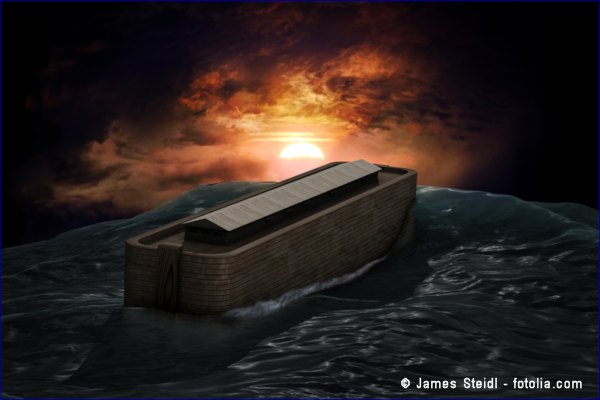
This week’s Haftarah (extra reading portion from the Prophets) was obviously chosen long ago because it included a reference to a key event in its associated Torah portion. The story of Noah and the flood is one of the greatest tragedies recorded in Scripture. The world had become so evil that “the LORD regretted that he had made man on the earth, and it grieved him to his heart” (Bereshit/Genesis 6:6). The word translated “regretted” is actually based from the same root word, “naham,” from which Noah’s name is derived. In some contexts, it can also mean “to comfort,” which appears to have been his father’s intention when he named him (see Bereshit/Genesis 5:29). This breadth of meaning encompasses the great irony of it all. God’s grief over extreme moral decay led to an extreme solution through Noah.

If in reference to times in which we live, I said, “this is like the days of Noah,” you may assume that I was making a statement about current moral decline. You might think that I was implying that we are on the brink of judgment, something similar to the devastating flood that wiped out all land and air creatures, except for Noah, his family and the animals on the ark. While that’s a reasonable conclusion, that’s not what God is saying through Isaiah in the quote I read at the beginning. Stating “this is like the days of Noah” in this context is not about the threat of judgement at all. On the contrary, it is a statement reaffirming God’s commitment to protect his people from such threats.

Soon after the flood, once the ground was sufficiently dry and Noah, his family, and the animals were able to leave the ark, God promised to never again destroy the world by a flood (see Bereshit/Genesis 9:11-17). The rainbow was to forever serve as a sign of God’s commitment to us. So many centuries later this is still the case. While flooding still poses a threat in the world, we needn’t fear the possibility of a flood of the magnitude of Noah’s day again. While that is good news for everyone everywhere, think what it must have meant to Noah’s generation. Talk about Post-traumatic stress disorder! While grateful for being preserved, what a horrific experience it must have been to witness the drowning of so many, and then to have to endure a whole year in a dark, cramped, smelly enclosed box, not to mention bobbing on the water for much of that time. Every drop of rain after that would have brought back extreme nightmarish memories. But every time the rainbow appeared the people would be reminded of God’s faithfulness.

This makes me wonder if the story of Noah’s ark isn’t more about not fearing dangerous threats than about the judgement that befell the world through the flood. It’s probably both, but I don’t think we spend enough time focused on God’s commitment to preserve his people.

But what are the days that are “like the days of Noah” spoken by Isaiah? Is this a general statement to the people of Israel to not fear hard times whenever they may occur? That’s a good principle to live by, but that’s not what’s going on here. God through his prophet is referring to another time, a time in the future that will be “like the days of Noah.” Through many of the Hebrew prophets we learn of such a day, when the threat of judgment will be no more. A day when Israel’s relationship with God will not only be restored but permanently established, never to be broken again. Due to the New Covenant as established by the Messiah, sin will be forgiven, the Torah (God’s teaching) will be internalized, and Israel will be God’s people forever (see Jeremiah 31:31-33). “Like the days of Noah,” but only more so, there will be nothing to fear ever again.

Until then, we can have a foretaste of that kind of security in God now. By putting our trust in Yeshua the Messiah’s death and resurrection, we, like Noah and his family, will be preserved in the midst of horrific circumstances. And even while the storms of life wage on, we needn’t be traumatized. Just as God has preserved us until now, he will continue to do so forever.

Scripture quotations are from The Holy Bible, English Standard Version®, copyright © 2001 by Crossway Bibles, a publishing ministry of Good News Publishers. Used by permission. All rights reserved.

Facebooktwitterredditpinterestlinkedinmail