For the week of September 6, 2025 / 13 Elul 5785
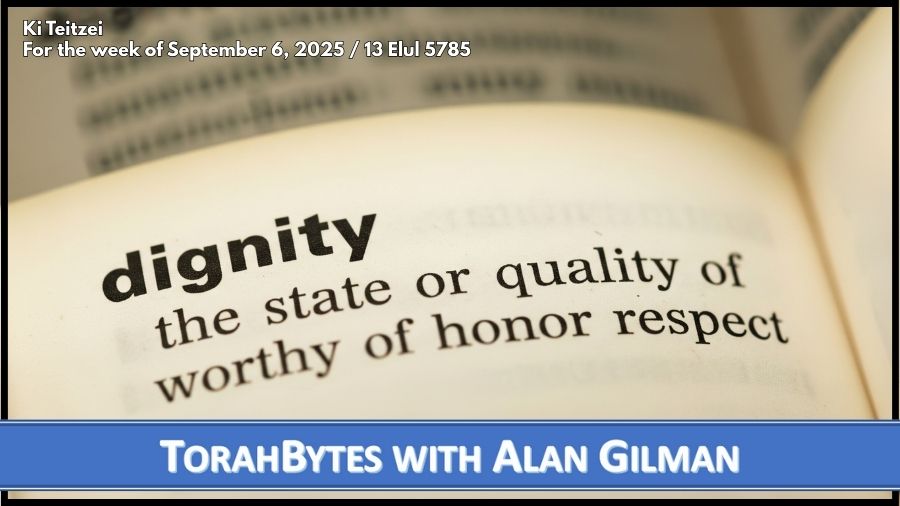
Ki Teitzei
Torah: D’varim/Deuteronomy 21:10 – 25:19
Haftarah: Isaiah 54:1-10
When you make your neighbor a loan of any sort, you shall not go into his house to collect his pledge. You shall stand outside, and the man to whom you make the loan shall bring the pledge out to you. (D’varim/Deuteronomy 24:10–11)
We often hear of people making a big deal about the Bible—negatively, that is—over its apparent backwards way of thinking. We click and tap on our devices while looking down on these ancients as misogynistic, slave-owning brutes. A compelling case can be made against such a characterization, especially when examining Scripture within its historical context. And it’s not because biblical characters were morally superior to the average person today. Many were not, though I’d say a good number were. It’s far more due to the uniqueness of God’s directives. The morality and justice of God’s commands were more than just good and right; they were so completely unusual for that day anywhere in the world.
We take much of biblical morality and values for granted. Principles such as the rule of law, the right to a fair trial, just treatment for immigrants, and care for the poor, although not always adhered to, are so deeply ingrained in the contemporary Western world that we assume they’ve always existed, when in fact they haven’t. These ideas were radical in their day and, in many places, still are.
In this week’s parsha (weekly Torah portion), we have an extraordinary example. In biblical times, as is still common in our day, loans often required a guarantee in case the borrower couldn’t repay. This was usually in the form of collateral, something of value the person owned, that may or may not have been kept in the lender’s possession during the loan period. If the loan was not repaid within the allotted time, the item or items would become the lender’s property.
The Torah example before us envisions the lender at the door of the borrower to receive the collateral. The Hebrew word “avot” is most often translated as “pledge” in English, denoting security for a loan. What isn’t clear is whether this situation occurs at the beginning of the loan agreement, when the lender first receives the collateral, or if the collateral had remained with the borrower but, due to defaulting on the loan, the lender is now coming to claim it.
Either way, due to the loan agreement, the lender has a right to the collateral. However, his right of possession doesn’t give him the right to enter the borrower’s dwelling. The legal right of the one doesn’t automatically override the sanctity of the borrower’s personal living space. Even though the borrower is clearly in a weaker position due to the lender’s claim to their property, the lender is still obligated to respect the borrower’s dignity.
What makes this extraordinary for the modern (and ancient) reader is how God’s directions here reflect the value of human dignity without getting all philosophical about it. Throughout Torah—and the rest of Scripture—God instructs people in his ways. He doesn’t lecture on the whys and wherefores to justify his take on life. For the most part, he provides instructions based on how he designed the world to be. He made it; he knows how it works. This issue, as one example, demonstrates how human dignity reflects our commonality and basic equality, based on the fact that we are all made in God’s image (see Bereshit/Genesis 1:26-27). This connection is not explained. It just is. We learn to be godly through the godliness of God’s directives.
And yet, do we respect the dignity of all, regardless of their life situation? Throughout most of history and in most places, class divisions, ethnic superiority, and economic disparity have been used to devalue those we see as “less than.” Some argue that only by eliminating all types of real and perceived inequality from society can we fully realize our inherent worth as human beings. But that’s not God’s way, however. Each person will experience the dignity we naturally possess when we choose to honor it as the God-given gift it truly is.
Scriptures taken from the English Standard Version
More on this week's reading (Beta version)
Note: The following link will open a list of other messages for this parsha (Torah reading portion). This feature is experimental. Some links may not work, especially if no message was produced for that week that year.
Click to see more messages for this week's readings
- Jewish Year 5787
- Jewish Year 5786
- Jewish Year 5784
- Jewish Year 5783
- Jewish Year 5782
- Jewish Year 5781
- Jewish Year 5780
- Jewish Year 5779
- Jewish Year 5778
- Jewish Year 5777
- Jewish Year 5776
- Jewish Year 5775
- Jewish Year 5774
- Jewish Year 5773
- Jewish Year 5772
- Jewish Year 5771
- Jewish Year 5770
- Jewish Year 5769
- Jewish Year 5768
- Jewish Year 5767
- Jewish Year 5766
- Jewish Year 5765
- Jewish Year 5764
- Jewish Year 5763
- Jewish Year 5762
- Jewish Year 5761
- Jewish Year 5760
- Jewish Year 5759
- Jewish Year 5758




Thank you for this reminder of the enduring value of Torah